World Class Company Directors Course Returns to Orana this November
17 September 2026

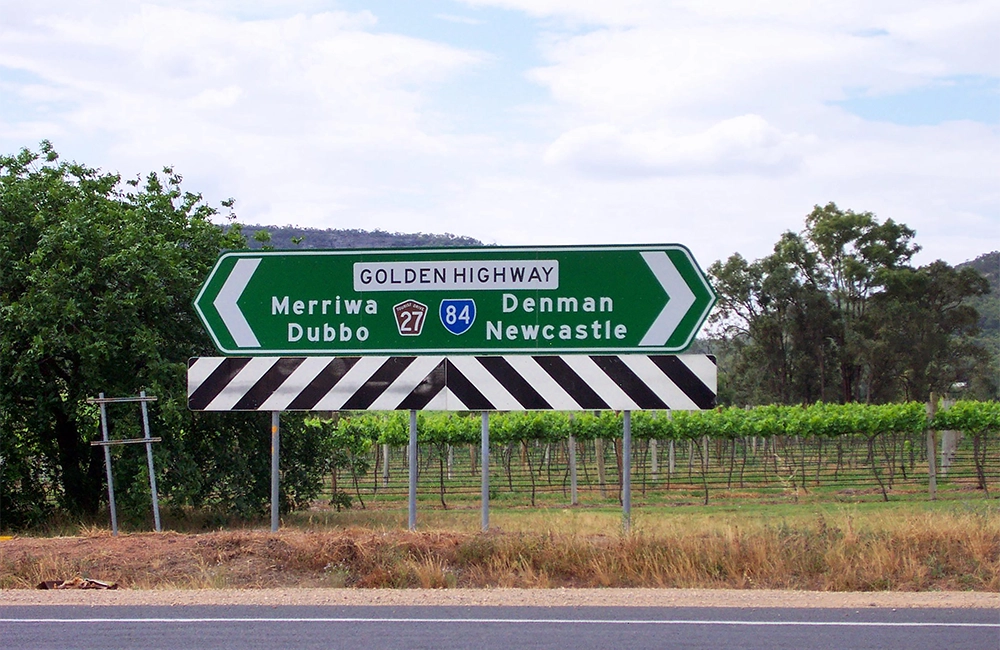
A new Taskforce has formed to launch a coordinated push to secure long-overdue investment in the Golden Highway, one of Australia’s most strategically important freight corridors.
Convened by RDA Orana and RDA Hunter in Maitland on Thursday March 12 and officially supported by the Member for Maitland and NSW Minister for Roads and Regional Transport, Jenny Aitchison, the Taskforce brought together industry, government and regional leaders to advocate for integrated road and rail upgrades along the Dubbo to Newcastle corridor.
New analysis shows freight volumes on the Golden Highway are forecast to increase by around 150% over the next decade, to 6.3 million tonnes, driven by major growth in mining, agriculture and containerised freight, as well as rapid expansion in renewable-energy and critical-minerals projects using the Port of Newcastle.
This escalation will intensify existing safety risks on a corridor that already records serious crashes and heavy-vehicle dominance, eroding travel reliability for local communities, tourism and essential services.
Minister Aitchison, who attended the meeting, officially endorsed the Taskforce and emphasised the importance of listening to communities and working collaboratively to achieve better outcomes.
RDA Orana Chair Brad Cam said the inaugural meeting underscored the urgency and scale of the challenge ahead.
“The Golden Highway is carrying national‑scale freight on infrastructure that no longer matches the task. Serious crashes and fatalities already impact local families, workers and travellers, and freight volumes are forecast to surge again,” said Mr Cam.
“This Taskforce has been formed and is widely supported, to ensure the corridor receives the strategic investment it urgently needs to protect lives, improve safety performance and support the industries that drive Australia’s economy.”
The Taskforce launch follows a comprehensive transport study undertaken by RDA Hunter and RDA Orana. Through extensive engagement with industry, the study found previous transport assessments had significantly underestimated freight volumes, and the upgrades needed were modest compared to the enormous benefits they would deliver.
RDA Hunter Chair Ian Pedersen said the economic case for investment was compelling.
“The Golden Highway Road Corridor shows a BCR of 2.3 on a $500 million investment, while the Orana–Newcastle Rail Corridor shows a BCR of 1.86 on a $1.1 billion investment,” said Mr Pedersen.
“These numbers are clear: upgrading the Golden Highway delivers far more value than it costs. For roughly half a billion dollars, NSW would gain more than a billion dollars in safety improvements, reduced travel times and a freight network that actually works for the whole state. The rail upgrades deliver the same kind of value - big benefits for a sensible level of investment.
“These upgrades outperform several major metro transport projects, and at a fraction of the cost.”
The Taskforce will focus on advocating for priority upgrades that are targeted, practical and high impact, including overtaking lanes every 10 kilometres, modifications to three bridges, improvements to four key intersections, completion of the Maryville–Gulgong rail line and upgrading the Gulgong–Ulan line to a 25-tonne axle limit.
The renewable energy transition alone will place unprecedented pressure on the corridor. Transporting components to the Orana and New England Renewable Energy Zones will require 30,000 oversize truck loads, 30 million solar panels and hundreds of thousands of tonnes of steel.
“The scale of freight coming into the Hunter and Orana regions is extraordinary. Without a fit-for-purpose corridor, we risk bottlenecks and traffic at a standstill for hours, more lives lost and lost economic opportunity. The Taskforce is determined to prevent that,” said Mr Cam.
“This is a once-in-a-generation opportunity to strengthen regional NSW. The demonstrated commitment to form the Taskforce is the first step in a coordinated, long-term effort to secure the infrastructure our regions need to thrive,” added Mr Pedersen.