World Class Company Directors Course Returns to Orana this November
17 September 2026
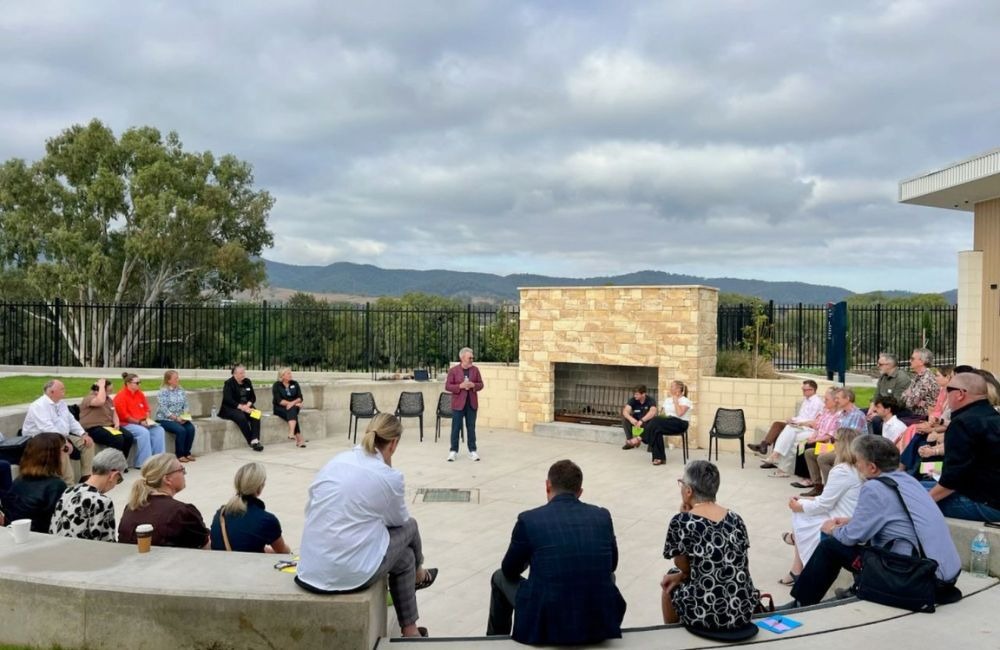
RDA Orana alongside The Energy Charter have hosted more than 40 local leaders from community, local councils, community organisations, business, the energy sector and government in Mudgee on Tuesday for the Regional Energy Accord Roundtable — a pivotal opportunity for regional leadership in Australia’s energy transition.
Hosted as part of a national series, the Roundtable enabled Central-West Orana voices to directly influence the development of the Regional Energy Accord, a new framework being co-designed to ensure regional communities have agency, influence and a collective voice as the energy transition accelerates.
RDA Orana CEO Justine Campbell said the strong turnout reflected the region’s determination to move from being a passive host of energy projects to an active partner in shaping outcomes.
“The transition is happening. What matters now is ensuring the people who live and work, not just in our region but across all of regional Australia, help set the priorities, manage the impacts and secure the longterm benefits,” Ms Campbell.
“With our region sitting at the forefront of Australia’s energy transformation, we see the Accord as a critical mechanism to ensure development is coordinated, transparent and genuinely beneficial for local communities.
“The Accord provides a pathway for regions to secure improved energy affordability, local jobs and procurement, better planning for housing and essential services, and stronger protection of land, water and biodiversity — all priorities for the Orana’s longterm prosperity.”
CEO of The Energy Charter, Sabiene Heindl said “The Regional Energy Accord is being co-designed with input across regions nationally as a highlevel national umbrella agreement that will enable locallyled, placebased Accords in each region.
“Every region is different and local knowledge matters. That’s why we are taking the time to visit the regions, hear what local leaders have lived and experienced, and use those insights to build a co-operative national framework,” said Ms Heindl.
“The Accord is not about supporting or opposing renewable energy projects. Its purpose is to ensure any energy development delivers real, tangible and enduring benefits for regional people, while impacts are managed responsibly and transparently.”
While each region will shape its own Accord, commitments are expected to align around three key pillars:
• Authentic engagement — early, honest and ongoing involvement of landholders, neighbours, councils, communities, young people and First Nations people.
• Delivering benefits and managing impacts — local jobs and procurement, housing and services planning, community wellbeing, protection of land and water, and meaningful First Nations partnerships.
• Transparency and accountability — clear commitments, public reporting and independent governance.
RDA Orana CEO Justine Campbell said the Roundtable demonstrated the region’s readiness to lead.
“Regional communities have been calling for a more coordinated, transparent and respectful approach to energy development, and the Accord is a direct response to that,” Ms Campbell said.
“It moves us from consultation to collaboration, from promises to proof. Today’s turnout shows the strength of our regional voice and our commitment to shaping outcomes that reflect our values, our landscapes and our longterm aspirations.”
Following the roundtable in Mudgee, The Energy Charter will continue their national listening tour of regional communities playing key roles in the energy transition, supported by RDA, councils, community groups, First Nations partners, industry and government as the Regional Energy Accord progresses toward a national draft later this year.